Can one summer beside the North Sea shape an entire family’s future?
Can two years of separation deepen love instead of ending it?
What happens when a Scottish historical romance travels from Burntisland’s cold shore to Georgia’s warm riverbanks?
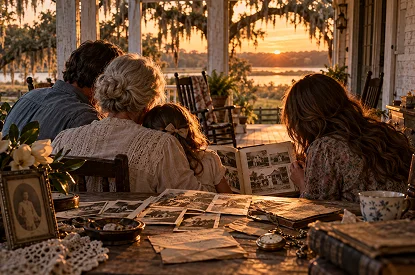
Why do shared sunsets become promises, memories, and a family legacy?
The Distance That Tests What Burntisland Began
Two years apart ask an adult question of two young people: can their connection survive when neither controls time, distance, or circumstance?
On May 18, 1910, Asa reaches the Ashland, Georgia, depot. Katie is waiting. He jumps from the moving train into her arms, while both finally release long-carried tears.
Because readers witness their Scottish farewell, the Georgia embrace feels earned. It confirms that love has endured uncertainty and that Asa’s journey has turned memory into a future.
Author John Derek Ruffin Makes Geography Personal
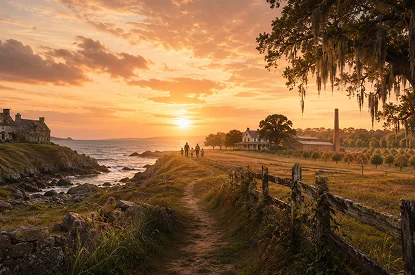
Scotland and Georgia represent two emotional climates. Burntisland offers cold surf, open horizons, and first love. Southern Georgia offers Spanish moss, cicadas, blue holes, farms, and building a future.
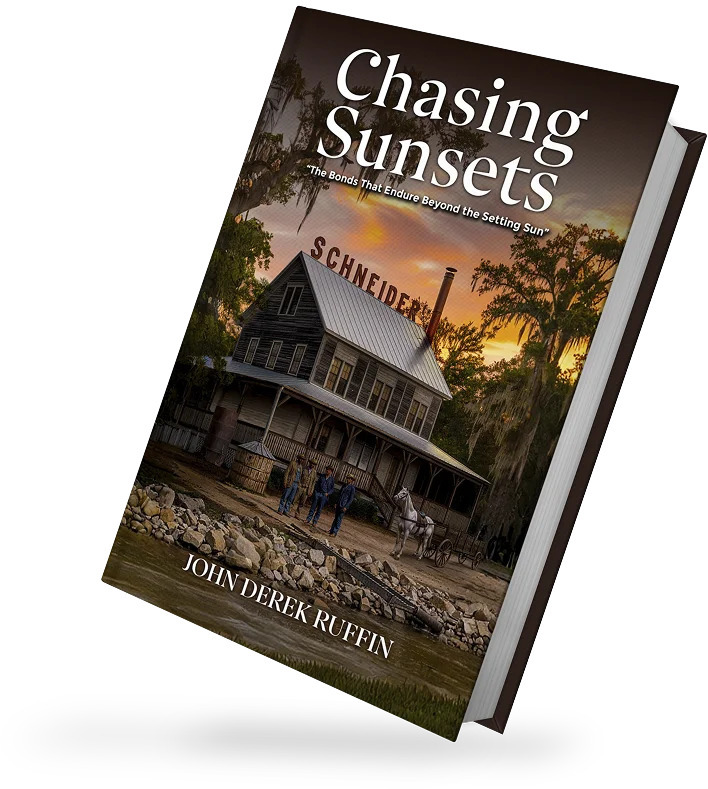
In Chasing Sunsets by John Derek Ruffin, Asa does not abandon Scotland. He carries its skills, music, memories, and values into America. Georgia does not erase his identity; it gives that identity room to grow.
The connection appears through:
- Distilling knowledge learned beside his Scottish foster father.
- Farming instincts suited to Georgia’s land.
- Violin and fiddle music carried across the ocean.
- Loyalty to Katie, his strongest link between both homes.
This blend creates historical texture without making the story difficult. Readers feel how migration changes a person while leaving the heart tied to earlier places.
When a Georgia Sunset Becomes Their Promise
After reuniting, Asa and Katie visit a blue hole along the Thronateeska River. The landscape differs from Burntisland, yet the emotional pattern feels familiar: water, open sky, closeness, and sunset.
As evening arrives, Asa says, “We’ve seen some pretty sunsets together in two countries.” He asks Katie to become his wife. Her joyful acceptance transforms the sunset from scenery into a symbol of continuity.
Here, the Scottish historical romance reaches its clearest meaning. Their proposal connects the North Sea to the Georgia River, showing that a bond can cross an ocean without losing its tenderness.
More Than Courtship: The Life They Build
Chasing Sunsets does not stop at reunion or marriage. Asa and Katie’s love faces work, social change, family responsibility, and devastating grief. They lose two children, yet cling to each other instead of allowing sorrow to divide them.
Later, hope returns through the birth of twins. The family, farm, brewery, charitable traditions, and sunset rituals that follow all grow from the partnership Asa and Katie protected.
Among historical scottish romance novels, this story stands apart by presenting love as daily construction. Romance becomes endurance, shared labor, grief survived together, generosity, faith, and traditions passed forward.
Why Readers Carry the Story Beyond Its Ending
The closing family sunset echoes Asa and Katie’s earliest moments. This circle makes the title meaningful. Chasing sunsets is not pursuing something that disappears; it is noticing beauty together before time moves forward.
The novel convinces through emotional range, not loud promotion. Young love, immigration, Southern history, humor, hardship, faith, and family continuity share the page. Readers seeking historical scottish romance novels receive more than courtship; they receive a portrait of belonging.
Asa and Katie connect Scotland and Georgia by making both places part of one promise. Their story suggests home is not only where love begins. Home is where love chooses to remain, rebuild, remember, and watch the next sunset.