What makes a family strong enough to survive grief, conflict, history, and change?
Can love remain present after death, distance, betrayal, and generations of pain?
Why do some homes feel filled with memories long after people are gone?
What happens when family traditions become a source of healing instead of simple nostalgia?
Can one novel make ordinary moments feel as meaningful as life-changing events?
1. A Family Saga That Feels Lived In
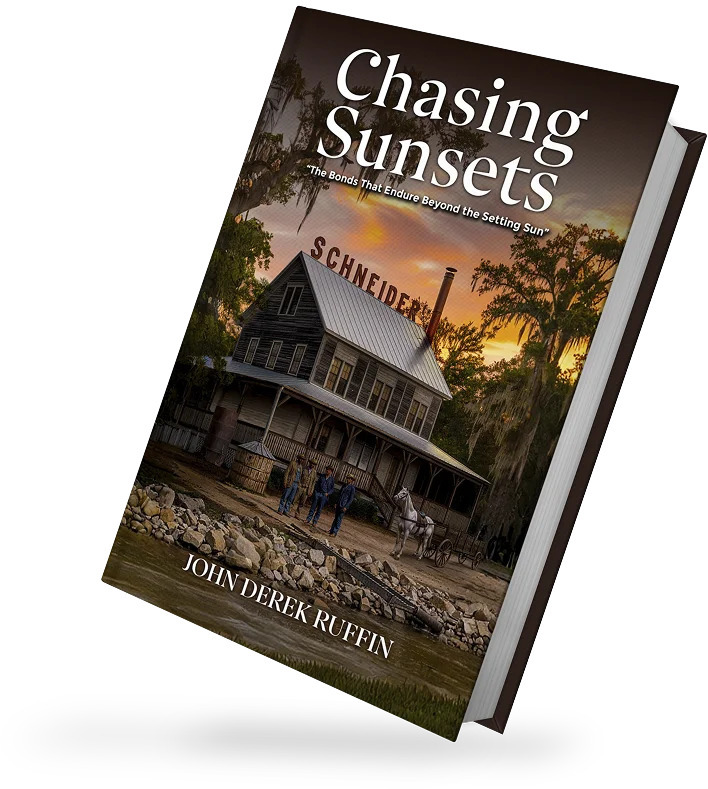
John Derek Ruffin builds Chasing Sunsets around the Campbell family of Sullivan County, Georgia. Their story reaches across generations, beginning with immigrant roots, farm life, a brewery, marriages, children, friendships, heartbreaks, and rituals that shape the family identity.
That depth gives the novel the appeal readers often seek in Family Stories. The Campbells do not feel like isolated characters.
They feel connected by shared places, inherited habits, remembered stories, and obligations that continue long after one generation is gone.
The old home, the Pump House, the farm, Lake Early, and the brewery become more than settings. They hold memories. Each place helps explain why family history matters so much to the people living inside it.
2. Books About Family Bonds Rarely Show Connection This Broadly
The strongest relationships in Chasing Sunsets are not limited to parents and children. Ruffin shows siblings, cousins, lifelong friends, neighbors, employees, and even family pets woven into the same emotional circle.
That wider idea of family gives the novel warmth and texture.
- John and Clover share a twin bond strengthened by age, loss, and memory.
- Rooster and Sweet are treated as family, not outsiders.
- Younger Campbells grow up surrounded by several generations of guidance.
- Even family animals carry stories, loyalties, and emotional meaning.
This matters because the novel keeps asking a quiet question: who counts as family? Its answer is generous. Family is built through love, presence, history, and repeated acts of care.
3. Why Emotional Fiction Books Need Grief Without Hopelessness
Readers drawn to Emotional Fiction Books will find grief everywhere in the novel. John loses Madie suddenly. Clover carries the memory of Ray. Asa and Katie endure the deaths of Cora and Thomas. Later, tragedy strikes the Lewinski family.
Yet Chasing Sunsets does not treat grief as an ending. Loss changes people, but it also reveals how they support one another.
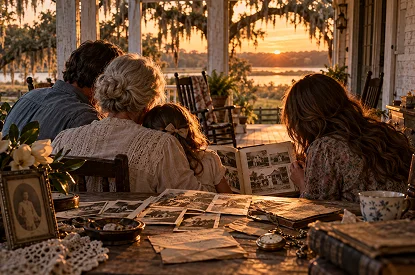
One of the book’s strongest ideas is that memory can remain active. The dead are spoken about, remembered through music, revisited through stories, and sometimes felt as a spiritual presence.
That makes the sadness meaningful rather than empty.
4. Fiction Books About Love And Loss Need a Living Symbol
Among Fiction Books About Love And Loss, this story stands out because love appears in many forms. Romantic love matters, but so do sibling loyalty, parental devotion, friendship, forgiveness, and connection to place.
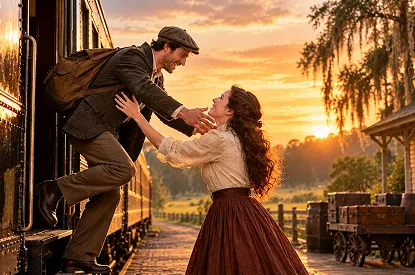
Asa and Katie’s early romance introduces the sunset motif. John and Madie later “chase sunsets” together. Brooks carries his mother’s influence into his relationship with nature. Family members repeatedly return to sunsets during moments of reflection.
The image becomes simple but powerful: life changes, people leave, yet beauty still appears.
That idea gives the novel emotional continuity across generations.
5. Everyday Rituals Make Heartwarming Fiction Books Feel Real
Many Southern fiction books depend on dramatic declarations. Chasing Sunsets often does something quieter. It shows meaning through repeated habits.
The Campbells gather, cook, play music, hunt, travel, care for animals, share stories, and watch sunsets. Those routines become the emotional architecture of the novel.
Some of the most memorable family traditions include:
- gatherings at the Pump House after work
- Thanksgiving trips to the Bahamas
- music played together across generations
- sunset cruises on Lake Early
- care for the farm, animals, brewery, and family cemetery
These moments help readers understand why the family remains close. Their bond is not accidental. It is practiced.
6. Humor Keeps the Emotion Human
Chasing Sunsets carries serious themes, yet it rarely becomes emotionally heavy for too long. Ruffin uses banter, family teasing, country humor, storytelling, and imperfect behavior to keep the Campbells believable.
That balance matters in Heartfelt Fiction Books. Real families can laugh during hard seasons. They can argue, make mistakes, tell embarrassing stories, and still remain fiercely connected.
The novel’s humor also protects it from becoming sentimental. Its characters are not polished symbols of family values. They are loud, flawed, funny, stubborn, affectionate, and sometimes outrageous.
Because of that, the emotional scenes land with more force.
7. Its Real Purpose Is to Ask What We Leave Behind
At its heart, Chasing Sunsets is about legacy.
The book also moves beyond private family life. When tragedy touches neighbors, the Campbells respond with help, hospitality, and presence. Later, public attention tests whether their values can survive exposure without losing the grounded relationships that define them.
That broad arc gives the story momentum. Readers watch inheritance become responsibility, responsibility become choice, and choice become legacy. The question becomes what they preserve.
The Campbells inherit land, businesses, memories, beliefs, responsibilities, and stories. Yet the novel suggests that the most important inheritance is not property. It is the way people treat one another.
The family foundation, community support, friendships across generations, care for animals, and respect for shared history all reinforce this idea.
By the final pages, the story circles back to the sunset that has followed the family for generations. John tells them, “Kids, this is what it’s all about: loving each other and chasing sunsets.”
That line captures the book’s purpose.
Chasing Sunsets by author John Derek Ruffin invites readers to think about their own families, memories, losses, traditions, and unfinished conversations.
It does not claim that close families avoid pain. Instead, it shows that closeness is built by returning to one another.
For readers who love Family Stories, that is the lasting reason to read it. The novel offers romance, grief, humor, history, conflict, faith, and second chances,
but its deepest subject is simple: love becomes legacy when people choose to keep showing up.